
 English



Views: 0 Author: Site Editor Publish Time: 2026-09-15 Origin: Site


Did you know a tiny electronic component practically dictates the lifespan of a diesel engine? Hidden deep within the exhaust system, these parts face a daily barrage of extreme heat, intense vibrations, and highly toxic gases. This hostile environment eventually triggers a subtle but destructive phenomenon known as sensor drift. The component starts feeding inaccurate pressure readings to the Engine Control Unit, even when the actual physical exhaust pressure remains unchanged.
The difference between a smoothly running fleet and a vehicle plagued by catastrophic engine failure comes down to rigorous quality control protocols at the factory level. In this guide, we pull back the curtain on how elite engineering facilities test for baseline deviation. You will learn why vehicle-specific calibration matters and how to ensure you invest in a reliable component.
Sensor Drift is a Silent Killer: Gradual deviations in exhaust pressure readings lead to premature Diesel Particulate Filter clogging, wasted diesel fuel, and severe mechanical engine damage over time.
Rigorous QC is Non-Negotiable: Industry-leading manufacturing facilities rely on automated thermal cycling, high-pressure shock testing, and multi-axis vibration analysis. This verifies that sensors maintain baseline accuracy across their entire lifespan.
Calibration is Key: Advanced zero-point calibration techniques and Application-Specific Integrated Circuit chip programming are implemented during assembly. This electronically locks in sensor accuracy and compensates for environmental variables.
Vehicle-Specific Standards Matter: Quality control protocols must align with exact Original Equipment Manufacturer specifications to ensure proper communication between the sensor and the engine computer.
Data-Driven Validation: Objective empirical testing compliant with IATF 16949 standards remains the only proven method to prevent baseline deviation before a component reaches the automotive aftermarket.
To truly grasp how automotive engineers test for component failure, we first need to understand the baseline function of the parts involved. We also must look at the incredibly harsh environments they are forced to operate within daily.
Imagine driving a heavy-duty truck up a steep mountain grade. The engine works harder, exhaust temperatures soar, and soot production spikes. The Diesel Particulate Filter captures this soot to reduce harmful emissions. However, the filter is essentially blind without its primary diagnostic tool: the differential pressure sensor.
This component measures exhaust gas pressure at two distinct points. One port monitors pressure immediately before the exhaust enters the filter substrate. The other monitors pressure right after it exits. By calculating the pressure differential between these two zones, the sensor provides the engine computer with precise data regarding soot accumulation. Once the pressure differential reaches a critical threshold, the engine computer initiates a regeneration cycle. It injects extra fuel to raise exhaust temperatures and incinerate the trapped particulate matter.
In the highly precise field of automotive metrology, sensor drift refers to the gradual, unintended shift of a measurement baseline over time. For an exhaust pressure sensor, the baseline reading should be exactly zero kilopascals when the engine is turned off and no gas is flowing.
When drift occurs, the internal calibration fails. The sensor might read 2 kilopascals or even negative 1 kilopascal in a completely zero-pressure state. Because this baseline deviation skews all subsequent dynamic readings, the component transmits continuously inaccurate data. The engine computer is then tricked into believing the filter is either completely blocked or completely clear, regardless of physical reality.
Baseline deviation is rarely the result of a single catastrophic event. Instead, it is the cumulative toll of operating in one of the most hostile zones within a modern chassis. The primary catalysts include:
Thermal Fatigue: A cold engine block on a freezing winter morning can rapidly heat up to over 600 degrees Celsius during an active regeneration. This violent expansion and contraction stresses the internal piezoresistive silicon elements.
Chemical Contamination: Diesel exhaust is a toxic cocktail of moisture, sulfuric acid, and unburned hydrocarbons. Over thousands of miles, microscopic corrosive elements can bypass protective membranes. This alters the electrical resistance of the internal circuitry.
Mechanical Vibration: The natural low-frequency rumble of diesel combustion combined with chassis vibrations from rough terrain can induce micro-fractures in delicate wire bonds. This leads to erratic voltage outputs.
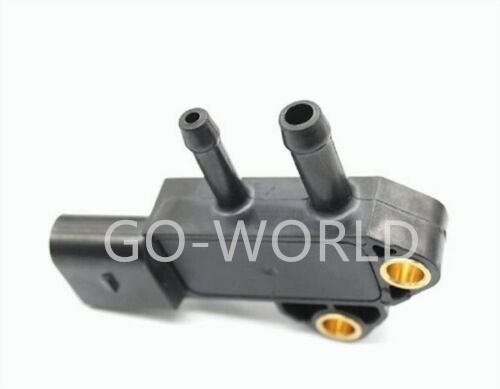
Failing to identify and mitigate measurement deviations during the manufacturing stage has cascading, highly destructive effects on the end-user vehicle. Proper quality control is not merely about passing a factory audit. It is about preventing catastrophic mechanical failure.
If a component drifts low, the engine computer assumes the exhaust filter is perfectly clean. Consequently, the computer delays or completely suspends the necessary regeneration cycles. Without these vital burn-offs, soot accumulates rapidly. The filter substrate eventually chokes into a solid brick of compacted carbon. This creates severe exhaust backpressure capable of blowing out turbocharger seals, destroying exhaust gas recirculation valves, and ultimately stalling the engine.
In contrast, a sensor drifting high falsely reports a severe restriction in the exhaust system. Reacting to this skewed data, the engine computer constantly triggers active regeneration cycles in a desperate attempt to clear a filter that is not actually blocked. This scenario is incredibly destructive. Relentless regeneration dumps excessive amounts of raw diesel into the exhaust stream. This devastates fuel economy and dilutes engine oil. Furthermore, the sustained extreme heat can physically melt the precious metal catalysts inside the filter.
Modern commercial and passenger diesel vehicles are bound by strict environmental regulations. A drifting measurement directly compromises the emissions control architecture. By providing faulty data, a vehicle may emit particulate matter well above legal limits without ever triggering a dashboard warning light. Rigorous quality control guarantees that these parts maintain their calibration. This keeps fleet operators compliant and prevents costly failures during mandatory state emissions inspections.
Mitigating baseline shift requires an exhaustive, multi-stage testing protocol. A reputable DPF sensor manufacturer does not rely on random batch sampling. Instead, they employ automated end-of-line testing using advanced environmental chambers. Here is the empirical process used to validate stability before a product is boxed and shipped.
Because rapid temperature fluctuation is the leading cause of electronic deviation, components must prove their resilience against thermal shock. During quality control, batches of assembled units are placed inside specialized environmental testing chambers. The automated system aggressively shifts the ambient temperature from negative 40 to positive 125 degrees Celsius in a matter of minutes.
Engineers continuously monitor the voltage output during these extreme transitions. The goal is to ensure that the internal piezoresistive silicon membrane and the surrounding polymer housing expand and contract at compatible rates. If the materials warp or the output voltage deviates beyond an acceptable microvolt tolerance, the entire batch is flagged for vulnerability and rejected.
To simulate the erratic exhaust flow and intense backpressures of a heavy-duty engine under load, units are connected to automated pneumatic testing rigs. These machines subject the ports to rapid pulses of high pressure followed immediately by a vacuum state.
This evaluates the mechanical elasticity of the internal diaphragm. After enduring thousands of pressure spikes, the air supply is completely cut off. The quality control software then measures whether the sensor returns to a perfect zero state. If the diaphragm suffers from mechanical fatigue and fails to return to its exact original position, it will inevitably cause permanent baseline drift in the field.
Diesel engines produce intense vibrations that can degrade circuit boards over time. To test for vibration-induced signal loss, components are mounted to electrodynamic shaker tables. These tables simulate the exact frequency and amplitude of engine rumble and off-road driving.
While violently shaken across the X, Y, and Z axes, the unit is powered on and connected to an oscilloscope. Technicians look for any micro-fluctuations in the signal output. A highly stable component will output a perfectly flat voltage line despite the severe mechanical stress. This proves that internal wire bonds and solder joints remain completely secure.
Looking at current industry trajectories, the landscape of automotive metrology is undergoing a massive shift. With the rollout of stricter global emission standards like Euro 7 and EPA Tier 4, the acceptable tolerance for measurement deviation is shrinking from single-digit kilopascals to mere fractions. Recent market analyses indicate a growing trend where top-tier producers are integrating artificial intelligence-driven predictive algorithms directly into the manufacturing testing software. This allows factories to identify microscopic anomalies in the silicon wafer structures long before they assemble the final housing. As a result, defect rates are pushed incredibly close to absolute zero.
Physical durability testing is only one half of the quality control equation. The other half relies on advanced electronic programming. Modern exhaust measurement devices are not passive mechanical gauges. They are smart electronic nodes that require precise digital calibration.
Zero-point calibration is the process of setting the baseline electronic output to correspond exactly with a physical state of zero pressure. When a truck is parked with the engine off, there is zero exhaust flow, meaning the pressure differential is exactly zero kilopascals. During manufacturing, the unit is placed in a verified zero-pressure vacuum. Its internal software is then programmed to output the exact baseline voltage required by the engine computer, which is typically around 0.5 volts.
Premium components utilize an Application-Specific Integrated Circuit chip to process raw analog data from the pressure membrane and convert it into a clean digital signal. During the final stages of factory assembly, engineers program this chip to actively compensate for minor, unavoidable environmental variables.
For instance, the chip is loaded with a thermal compensation algorithm. If the ambient temperature under the hood rises to 100 degrees Celsius, the chip recognizes the change and mathematically adjusts the pressure output to prevent thermal deviation. This intelligent active compensation is the defining factor that separates high-tier engineering from cheap aftermarket alternatives.
While the fundamental physics of exhaust pressure measurement remain consistent across diesel platforms, the specific operational parameters vary wildly between automakers. Different engine displacements, exhaust routing designs, and software calibration strategies require tailored testing protocols. Premium manufacturers validate their products against exact Original Equipment Manufacturer specifications to ensure seamless integration.
American heavy-duty diesel engines create a highly volatile exhaust environment. When a truck is pulling a massive trailer up a hill, exhaust gas temperatures and volumetric flow rates spike dramatically.
Quality control for a Chevrolet DPF pressure sensor, such as the 1MPP2-2 variant, must prioritize extreme thermal shock resistance and high-pressure membrane durability. Operating on a standard 3-pin, 5-volt reference architecture, these specific units are subjected to rapid pressure cycling that simulates sudden backpressure surges caused by heavy acceleration. Furthermore, the voltage output curve must precisely match General Motors' specific engine computer parameters. If the baseline shifts slightly under a heavy load, the computer may falsely detect a clogged filter and prematurely derate the engine power. This is a critical failure for commercial operators.
European automakers operate under stringent Euro 6 emission regulations, utilizing highly efficient, smaller-displacement engines. Peugeot often utilizes a specialized system that incorporates an additive fluid to lower the combustion temperature of trapped soot.
For a Peugeot DPF pressure sensor designed for 1.6HDI and 2.0HDI platforms under OEM specification 161809, the testing focus shifts toward hyper-sensitivity and low-pressure accuracy. Because the system actively manages soot at lower temperatures, the differential changes across the filter are often much more subtle than in larger heavy-duty engines. Factory testing involves rigorous zero-point calibration checks to ensure micro-fluctuations are accurately reported. This filters out acoustic resonance from the high-pressure direct injection system.
Renault diesel engines require components that offer exceptional electronic stability and aerodynamic integration. Because their engine modules are highly sensitive to voltage irregularities, a Renault exhaust pressure sensor, like the 2276000Q0C model, undergoes stringent electromagnetic compatibility testing.
This ensures the signal does not drift due to electrical interference from the vehicle alternator or high-voltage injectors. Additionally, quality control engineers simulate specific condensation buildup patterns typical in Renault exhaust layouts. Moisture freezing inside the housing is a primary cause of mechanical rupture. To combat this, environmental chambers verify that the internal sealing can withstand severe freeze-thaw cycles without compromising the baseline reading.
To better understand the engineering gap in the current market, review the following comparison between standard aftermarket testing and elite tier-1 manufacturing protocols.
Test Parameter | Standard Aftermarket QC | Tier-1 OEM-Level QC |
|---|---|---|
Thermal Shock Testing | Random batch testing, limited temperature range. | 100% end-of-line testing from -40 to +125 degrees Celsius. |
Calibration Method | Manual baseline adjustment, prone to human error. | Fully automated ASIC chip programming with thermal compensation. |
Vibration Analysis | Basic mechanical drop tests. | Multi-axis electrodynamic shaker tables simulating engine resonance. |
Target Defect Rate | Acceptable 2-3% failure rate out of the box. | Near zero defect tolerance compliant with IATF 16949 standards. |
When a manufacturer bypasses rigorous drift testing, the end-user ultimately pays the price. A component that slowly loses its zero-point baseline feeds skewed data to the engine computer. This results in mechanical symptoms that compound over time.
The most common consequence of a baseline shifting high is hyper-active regeneration. Interpreting the artificially high pressure as a heavily clogged filter, the engine computer initiates a burn-off cycle. Because the soot does not actually exist, the pressure reading will not drop significantly afterward. This prompts the computer to trigger yet another cycle. Drivers will notice a drastic reduction in fuel economy, consistently high idle RPMs, cooling fans running constantly, and an acrid smell of unburned diesel.
Modern computers run continuous rationality checks. If the data provided contradicts other engine parameters, the system triggers a Check Engine Light. Mechanics using diagnostic scan tools will typically uncover specific fault codes related to baseline deviation. These include:
P2452: Pressure Sensor Circuit Malfunction. This is often triggered if internal electrical drift pushes the voltage output completely out of the expected range.
P2453: Pressure Sensor Circuit Range or Performance. This points to a rationality failure. The sensor is reading a pressure that is physically impossible given the current engine load.
P2454: Pressure Sensor Circuit Low. The baseline has shifted below zero, often reading negative pressure when the engine is off.
If the deviation is severe enough that the computer can no longer safely calculate soot accumulation, it defaults to self-preservation. To prevent a potential vehicle fire or turbocharger blowout from excessive backpressure, the engine computer activates Limp Mode. It intentionally restricts fuel injection, disables turbo boost, and limits top speed. This forces the driver to seek immediate mechanical repair.
For auto parts distributors, fleet managers, and independent mechanics, sourcing replacement parts is a high-stakes decision. The visual appearance of a plastic housing reveals absolutely nothing about its internal calibration or resistance to baseline deviation. To protect your customers, evaluate suppliers based on their documented quality control infrastructure.
The foundational benchmark for any automotive electronics supplier is the IATF 16949 certification. Developed by the International Automotive Task Force, this standard introduces stringent requirements specific to the automotive supply chain. A manufacturer holding this certification is audited for defect prevention and continuous improvement. This ensures they have standardized, repeatable protocols for detecting electronic drift before a batch leaves the facility.
A reputable supplier will never outsource their critical validation processes. Inquire about their in-house laboratory capabilities. High-quality production requires substantial capital investment in programmable thermal shock chambers, automated pneumatic calibration lines, and electrodynamic shaker tables. If a factory relies entirely on manual calibration, human error will inevitably lead to inconsistent performance.
Exhaust pressure sensor drift is a complex, highly technical issue that can quietly destroy a diesel engine from the inside out. Fortunately, it is entirely preventable through strict, high-tech quality control protocols involving thermal, pressure, and electronic stress testing.
Cutting corners by purchasing a cheap, untested component is a dangerous gamble. It will ultimately cost thousands in forced manual regenerations, melted filter substrates, and blown turbochargers. Always source your components from a verified manufacturer that prioritizes stringent zero-point calibration and vehicle-specific validation. If you are looking for reliable, factory-tested replacement parts, visit Go-World to find the exact drift-free component matched to your vehicle's OEM specifications. By choosing a supplier dedicated to empirical testing, you protect the longevity of your fleet and the satisfaction of your customers.
Failure is typically caused by a combination of extreme exhaust heat, soot and carbon blockage within the rubber connection hoses, and moisture freezing inside the plastic housing. Internal electrical drift is also a major factor, where the delicate circuitry loses its zero-point calibration over time due to vibration and thermal shock.
While the external metal or rubber hoses leading up to the unit can be removed and cleaned of heavy soot blockages, the electronic sensor itself cannot be repaired. If the internal piezoresistive membrane has degraded or the internal chip has drifted, the entire unit is permanently compromised and must be replaced.
Yes. Simply bolting on a new part and plugging in the connector is not enough. You must use a diagnostic scanner to perform a relearn or adaptation procedure. This critical step tells the engine computer to erase the old, drifted data values and accept the new component's precise zero-point baseline.
There is no strict mileage interval for replacement, as lifespan heavily depends on driving conditions and fuel quality. However, commercial fleet engineers often recommend inspecting the sensor and its connecting hoses every 100,000 miles. If the vehicle begins showing erratic regeneration patterns or throws a rationality code, immediate replacement is required.
Absolutely. If the sensor feeds inaccurately high pressure readings to the engine computer, the system will assume the exhaust is severely restricted. To protect the engine from catastrophic backpressure damage, the computer will automatically trigger Limp Mode. This cuts turbocharger boost and limits fuel injection, resulting in a massive loss of acceleration and top speed.


